



TEAM NAVER Exports 1784 Smart Building Solution to Major Mixed-Use Complex in Japan for the First Time
TEAM NAVER Exports 1784 Smart Building Solution to Major Mixed-Use Complex in Japan for the First Time
TEAM NAVER Exports 1784 Smart Building Solution to Major Mixed-Use Complex in Japan for the First Time
- First external deployment of the 1784 model; technology commercialized to enable seamless robot services in conventional buildings
- Provides core technology infrastructure, including ▲autonomous robots, a ▲multi-robot control system, ▲digital twin technology and ▲vision-based positioning
- Advances robot services using four years of real-world operating data; collaboration to expand into digital twin-based building management and other Physical AI applications
July 23, 2026
TEAM NAVER announced on July 23 that, together with NTT EAST and Mitsui Fudosan, it will bring the smart building operations technology used at its 1784 headquarters to Tokyo Midtown Yaesu, located in one of Tokyo’s key commercial districts.
[Note] Tokyo Midtown Yaesu is a 45-story mixed-use complex connected to Tokyo Station, housing retail facilities such as restaurants, along with offices, a hotel, a bus terminal and an elementary school.
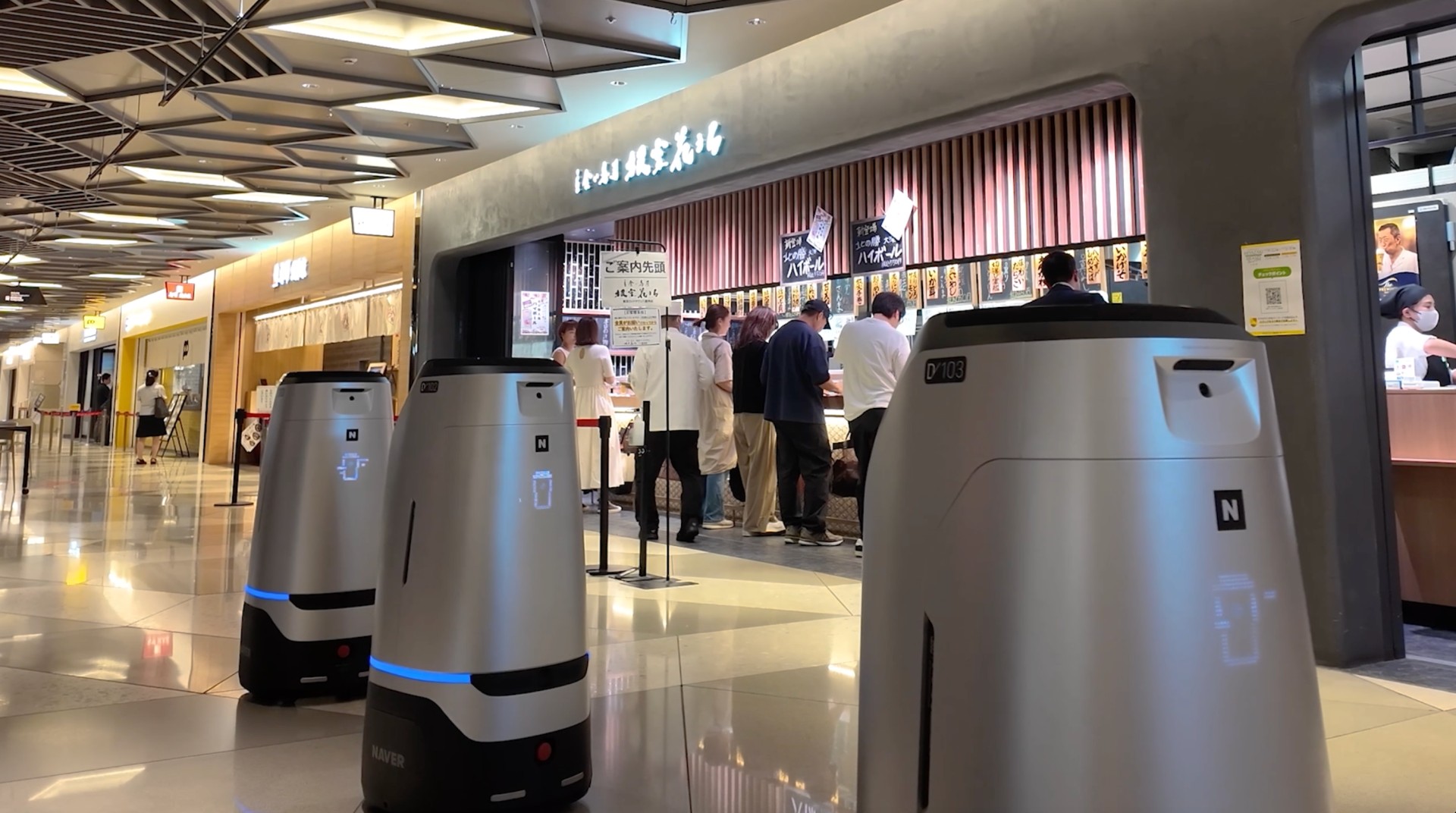
[Image] Rookie robots wait to deliver food orders placed by office workers.
TEAM NAVER will provide an integrated suite of technologies used at 1784, including autonomous robots, a cloud-based robot control system and digital twin technology. Under the partnership, Mitsui Fudosan will operate the robot delivery service at Tokyo Midtown Yaesu and manage its integration with building facilities, while NTT EAST will build the digital twin environment and handle maintenance for the delivery robots.
The project marks the first commercial deployment of TEAM NAVER’s smart building model beyond 1784, where it was developed and put into operation. The deployment is particularly notable because the technology has been optimized to support seamless robot services even in conventional buildings without smart infrastructure such as dedicated robot elevators or specialized cloud environments.
The three companies will begin by launching a cloud-based autonomous robot delivery service at Tokyo Midtown Yaesu. Because Tokyo Midtown Yaesu, like 1784, combines offices and retail facilities in a single mixed-use complex, the service will draw on four years of operating expertise and data TEAM NAVER has amassed through its robot services.
At 1784, TEAM NAVER has operated a range of robot delivery services and accumulated robot sensor data, spatial data and service-execution data. Drawing on real-world operating data—including optimal routes by time of day and recurring operational exceptions—it has continuously improved the robots’ navigation and task performance.
These services are powered by TEAM NAVER’s technology convergence capabilities, which bring together robotics, cloud computing and other technologies. Many of these technologies have also been deployed at Tokyo Midtown Yaesu. Key technologies include ▲Rookie, an indoor autonomous robot; ▲ARC brain, a multi-robot control system; ▲digital twin technology; and ▲ARC eye, a vision-based positioning technology.
ARC brain is an orchestration platform that centrally coordinates the movements and roles of multiple robots, serving as an essential component for efficient service operations in large-scale spaces such as Tokyo Midtown Yaesu. Through cloud processing, it integrates robots with building infrastructure, including speed gates and elevators, helping them interact with users and operate without interruption in everyday environments.
Looking ahead, TEAM NAVER, Mitsui Fudosan and NTT EAST plan to identify new use cases and scale up the robot delivery service. They also intend to expand their collaboration into a wider range of Physical AI areas, including indoor AR navigation and digital twin-based building management.
The project was led by NAVER CLOUD’s Japan Business Development team and carried out using NAVER LABS’ robotics and vision technologies. TEAM NAVER will continue to advance the core technologies needed to deliver seamless robot services across a wide range of buildings regardless of their infrastructure, while expanding deployment of the 1784 model at sites in Korea and abroad.
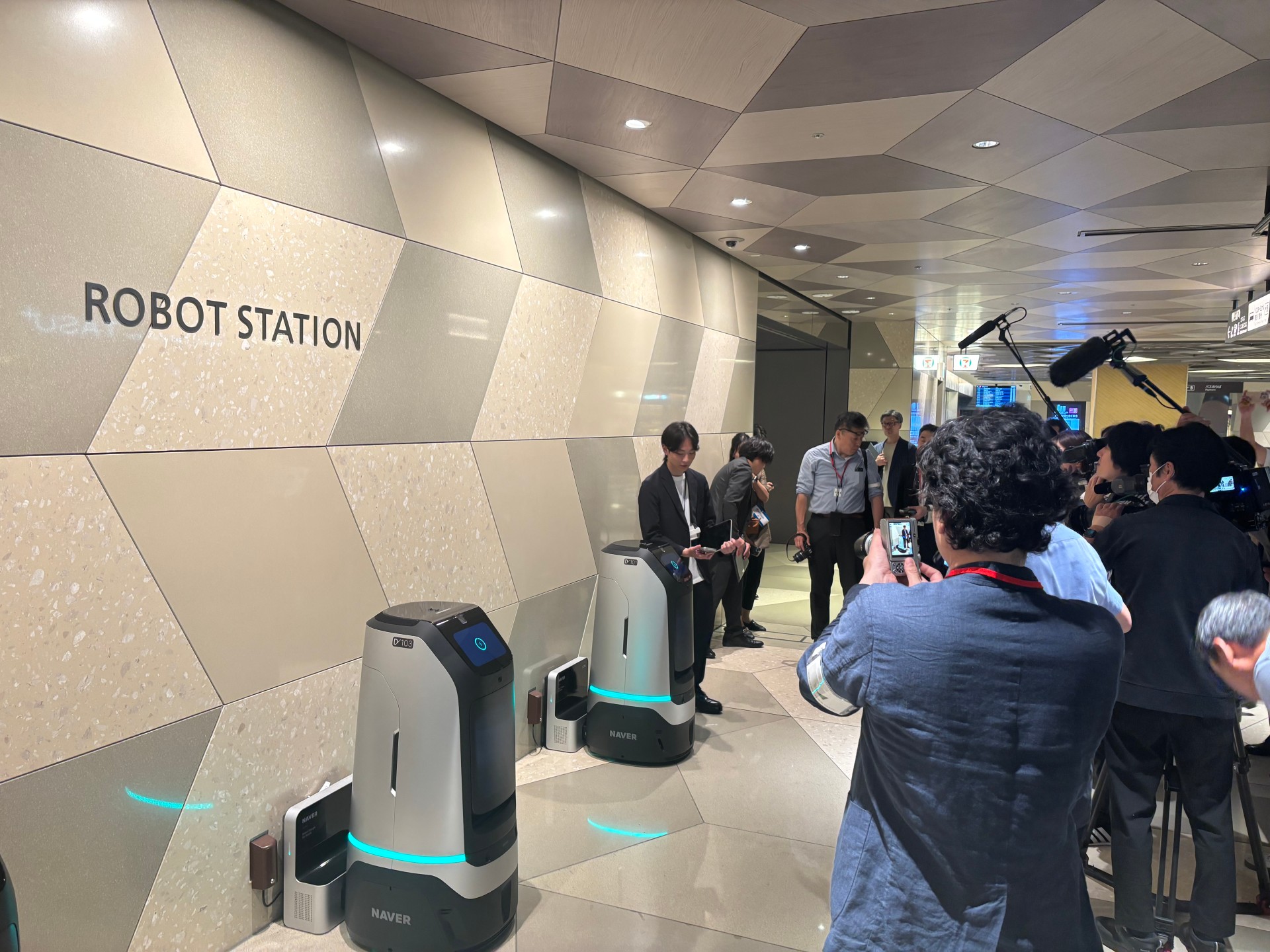
[Image] The three companies demonstrate the robot delivery service at the July 21 press briefing
Meanwhile, NTT EAST said it hosted a successful press briefing at Tokyo Midtown Yaesu on July 21 (local time) to unveil the project. The event highlighted TEAM NAVER’s core Physical AI technologies, including robotics and digital twin technology. The three companies also demonstrated robot delivery and indoor AR navigation services, drawing strong interest from attendees. (End)
