





TEAM NAVER Demonstrates Global Technological Prowess with 10 Papers Accepted at “NeurIPS 2025,” the World’s Most Prestigious AI Conference
TEAM NAVER Demonstrates Global Technological Prowess with 10 Papers Accepted at “NeurIPS 2025,” the World’s Most Prestigious AI Conference
TEAM NAVER Demonstrates Global Technological Prowess with 10 Papers Accepted at “NeurIPS 2025,” the World’s Most Prestigious AI Conference
- Presented 10 studies focused on improving AI efficiency and safety, and expanding real-world industrial applications
- Highlighted TEAM NAVER’s R&D capabilities and built global networks through booth operation and local meetups
December 9, 2025
TEAM NAVER achieved the milestone of having 10 papers accepted at the “Neural Information Processing Systems (NeurIPS) 2025,” the world’s most prestigious artificial intelligence (AI) conference. Alongside showcasing its research capabilities, TEAM NAVER introduced core technologies that strengthen the competitiveness of its AI services, including “HyperCLOVA X”, demonstrating its global leadership in AI once again.
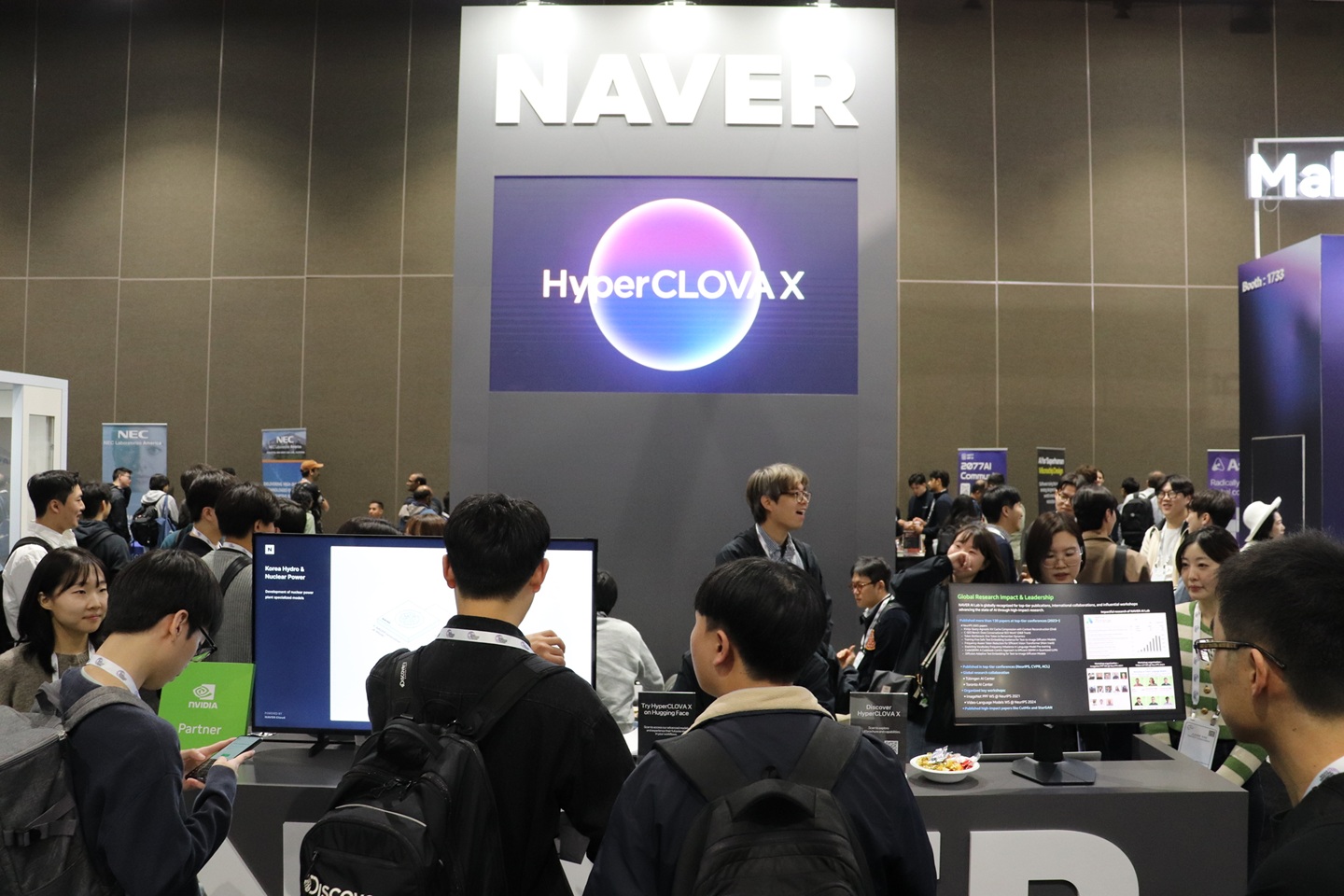
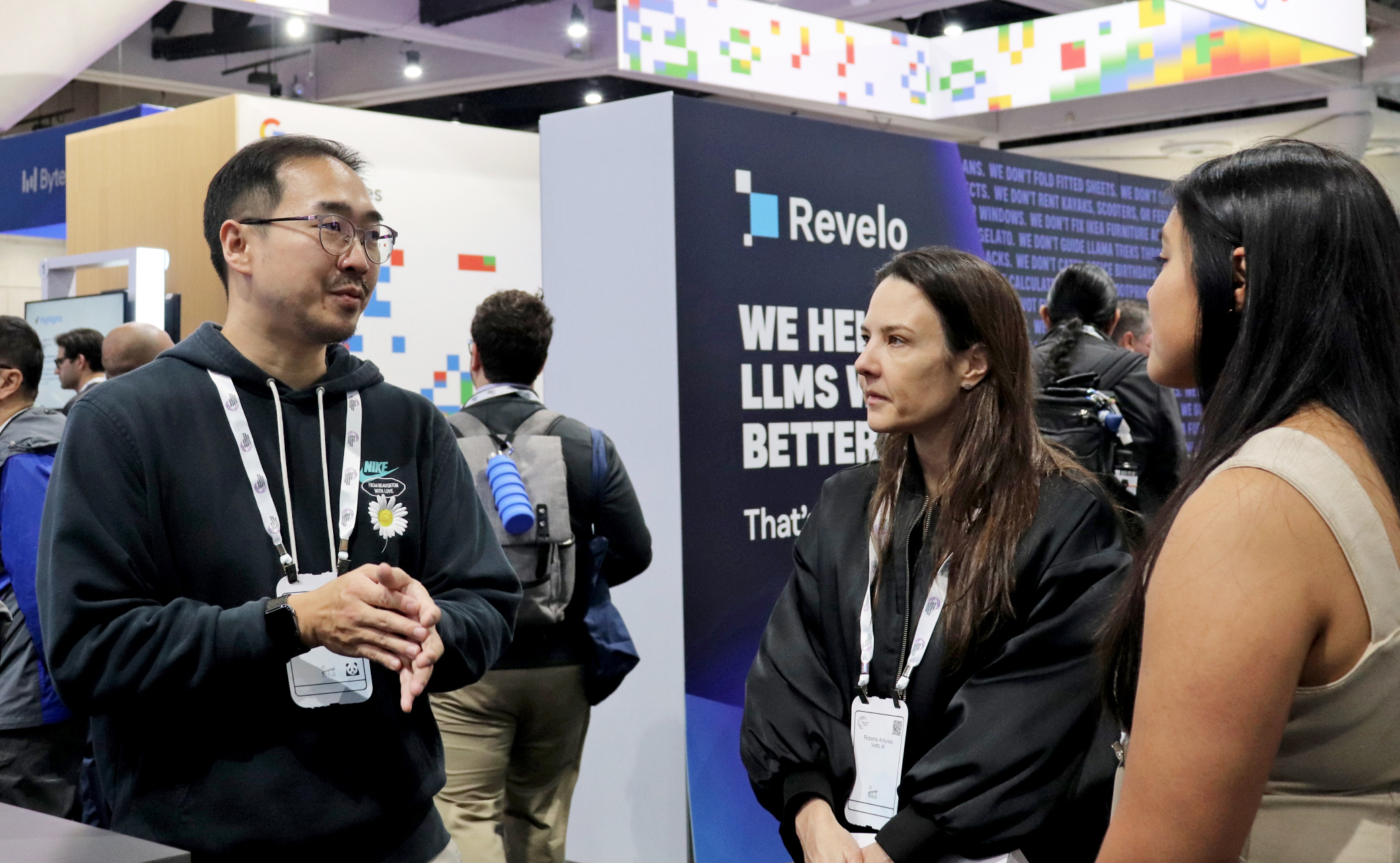
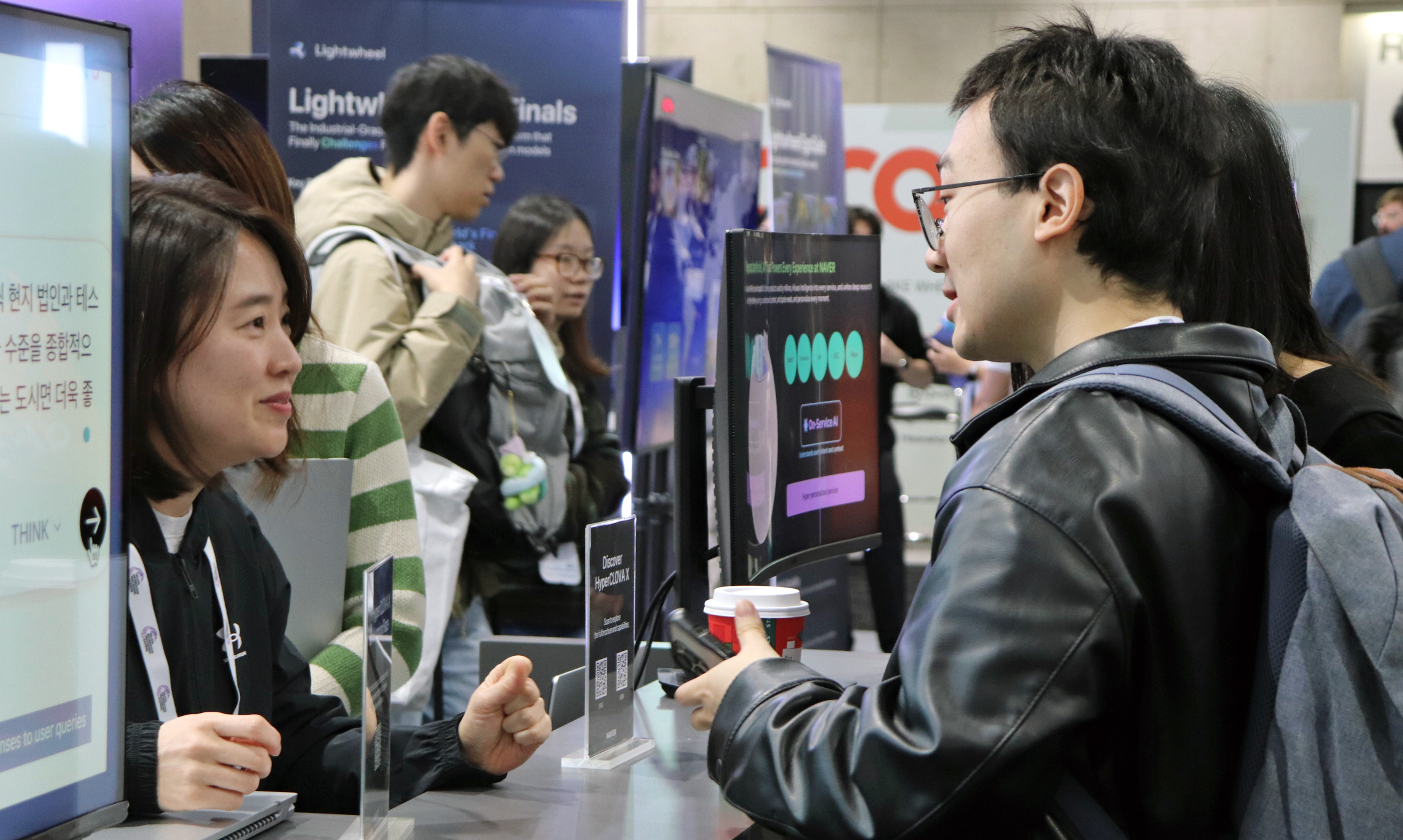
[Photo] NAVER Cloud representatives introduce TEAM NAVER’s AI capabilities to international AI researchers.
At the conference, TEAM NAVER shared its unique full-stack AI strategy—spanning research, its proprietary hyperscale AI model HyperCLOVA X, NAVER’s on-service AI, and industry-specific vertical solutions—under the theme “From Research to Reality,” with top researchers from around the world.
The 10 papers accepted this year present practical approaches to efficiently and safely applying full-stack AI technologies in real-world services and industrial settings. They highlight breakthroughs across three major technical areas: efficient operation of hyperscale AI (efficiency), enhancing the safety of generative AI (controllability and safety), and expanding into the physical world and robotics (physical AI).
Key technologies aimed at reducing service costs and improving processing speed for large language models (LLMs) included a cache compression technique that selectively compresses important data during long-context processing, resulting in a reduction of memory usage by up to four times and a doubling of speed without sacrificing performance. Another study demonstrated that removing unnecessary intermediate steps in the chain of thought (CoT) process used by LLMs to solve complex problems can maintain accuracy while improving computational efficiency.
Research focused on enhancing the quality of AI-generated outputs and ensuring safe control has also gained attention. This included a new benchmark for precisely evaluating content quality in interactive search environments, a text embedding technique that more accurately reflects user intent during image generation, and a safety control technology that suppresses the generation of harmful content without requiring additional retraining.
Studies exploring the expansion of AI into the physical world were also introduced. Notable examples included a method for improving learning efficiency by compressing scene information into bottleneck tokens in time-continuous environments such as robotics and video, and a model architecture designed to help robots remember changing spaces and autonomously navigate paths.
TEAM NAVER actively engaged in building global networks at this year’s NeurIPS. With over 29,000 AI researchers from around the world in attendance, the team operated a unified booth to showcase its key research achievements and AI technologies. It also hosted a meetup event, “Meet the NAVER AI Team,” where it shared its technological vision and philosophy with more than 80 domestic and international AI researchers, reinforcing its presence on the global stage.
A NAVER Cloud representative stated, “Having 10 papers accepted at NeurIPS, where the acceptance rate is only about 25%, demonstrates that TEAM NAVER’s research capabilities and technologies are globally recognized.” He added, “We will continue to strengthen our research capacity to expand the global AI ecosystem and enable AI to be implemented in real-world services and industries.”
Meanwhile, NeurIPS is the world’s most prestigious AI and machine learning conference, first launched in 1987. Marking its 39th annual conference this year, NeurIPS 2025 was held in San Diego, California, from December 2 to 7. (End)
[Reference] Overview of TEAM NAVER’s 10 papers accepted at NeurIPS 2025
l Efficiency: Research on the Efficient Operation of AI
- KVzip: Query-Agnostic KV Cache Compression with Context Reconstruction
- CodeGEMM: A Codebook-Centric Approach to Efficient GEMM in Quantized LLMs
- Exploiting Vocabulary Frequency Imbalance in Language Model Pre-training
- Frequency-Aware Token Reduction for Efficient Vision Transformer
- Less is Not Worse: Effective Reasoning Without Complete Reasoning Chains
l Controllability and Safety: Research on Safe and Controllable Generative AI
- C-SEO Bench: Does Conversational SEO Work?
- Diffusion Adaptive Text Embedding for Text-to-Image Diffusion Models
- Training-Free Safe Text Embedding Guidance for Text-to-Image Diffusion Models
l Physical AI: Research on Expanding AI Into the Physical World and Robotics
- Token Bottleneck: One Token to Remember Dynamics
- Kinaema: a recurrent sequence model for memory and pose in motion
